5 Hidden Features of the Rog Cetra True Wireless Speednova You Must Know About
Introduction
The ROG Cetra True Wireless Speednova occupies a niche at the intersection of gaming-focused audio and everyday wireless convenience. On the surface it looks like many contemporary true wireless earbuds: compact charging case, stemless buds, and an emphasis on low-latency performance. What elevates the Speednova for many buyers, however, are the subtle or undocumented behaviors and companion-app options that rarely make it into headline spec lists.
This article explains five lesser-known features that can materially change everyday use—whether the buyer is a competitive gamer, a commuter who cares about voice clarity, or someone who uses earbuds for long work sessions. The analysis is framed around real-world use cases and common buyer concerns: latency, microphone performance, fit and comfort, battery management, and software customization.
Quick product primer
Before diving into hidden capabilities, it helps to set expectations. The Speednova is positioned as a performance-oriented true wireless earbud with features aimed at gamers and power users: strong midrange and punchy bass for game and media immersion, a companion app that exposes advanced settings, and a focus on latency reduction. Buyers typically care about how fast the buds respond in-game, how reliable the microphone is on calls, battery life under different modes, and whether the buds remain comfortable during extended sessions—areas where the Speednova’s subtleties shine through.
Five hidden features explained
1. Per-device low-latency profile switching
One of the most impactful hidden features is the ability to persist a low-latency game profile per paired device through the companion app. Rather than forcing users to toggle a global “game mode” on and off every time they switch between a phone and a laptop, the Speednova can remember which paired host needs ultra-low latency. In practice, this means:
- When the earbuds connect to a gaming console or a laptop used for competitive play, the app can automatically engage a lower-latency codec and tighter buffer settings.
- When the same earbuds reconnect to a smartphone for music or calls, the profile returns to a higher-fidelity, slightly higher-latency mode tuned for media playback.
Use case: a gamer who plays on PC in the evening and uses a phone for podcasts during commutes will get reduced input lag in matches without sacrificing audio quality for mobile listening.
2. Adaptive environmental tuning (fine-grained ANC + ambient passthrough)
Many buyers see “ANC” as a binary option—on or off. The Speednova’s lesser-known adaptive tuning goes further: the earbuds monitor ambient noise and automatically adjust both the ANC intensity and the ambient-pass-through curve to keep voices and critical environmental cues audible. Key behaviors include:
- Dynamic ANC scaling during variable noise situations (for example, stronger isolation on a subway then softer in a café to permit conversations).
- An ambient-pass-through mode that prioritizes speech frequencies, so announcements and nearby conversations remain intelligible while maintaining a general noise-reduced listening experience.
Use case: commuters who need situational awareness—such as listening for stop announcements—benefit from reduced noise without losing the ability to hear spoken cues when necessary.
3. One-bud-first-connect and seamless mono switching
While many TWS sets support single-bud use, the Speednova implements a subtle convenience: the earbud that reconnects first becomes the primary and retains individualized settings (EQ and call mic routing) instead of defaulting to a generic mono configuration. The practical outcomes are:
- Users can use the left or right bud independently with their preferred EQ and microphone behavior preserved.
- When switching from stereo to mono mid-session—say, to use one earbud while charging the other—calls and media resume immediately on the active bud without awkward re-sync delays.
Use case: remote workers who take calls while also monitoring their surroundings can flip between mono and stereo on the fly without manual reconfiguration.
4. Touch-control macros and context-sensitive gestures
Many earbuds advertise touch control remapping, but the Speednova exposes context-sensitive macros that combine gestures, timing, and the hub device’s state. Examples of what this enables:
Discover deals on Audio & Headphones — updated daily.
Shop Amazon →- A long-press when idle can trigger voice assistant, but the same long-press while in a game can switch to the low-latency profile instead.
- Double-tap followed by a hold can be configured to toggle between sound presets (e.g., “Game,” “Movie,” “Vocal clarity”) without opening the app.
- Customizable volume control gestures allow users to adjust volume on the earbuds without using the host device; the control can respect system volume limits to avoid sudden jumps.
Use case: players who want to stay in the action can swap audio presets or toggle mic modes without tabbing out of their game. Commuters can change transparency modes quickly when stepping on or off transit.
5. On-device diagnostics and firmware rollback
Firmware updates are standard, but the Speednova’s app also maintains a local diagnostic log and an option to roll back recent firmware updates if a user encounters unexpected regressions. This is a particularly useful hidden feature because:
- It provides battery health graphs and per-earbud charge/discharge curves so users can spot uneven wear or a failing cell.
- It stores call quality logs and packet-drop statistics that make troubleshooting intermittent call issues far easier, either alone or with support staff.
- The rollback option lets users revert to a previous firmware for stability—valuable if a new update introduces latency spikes or touch-control regressions.
Use case: small esports teams or streamers who need predictable behavior can test new firmware on a non-critical device and revert quickly if something disrupts performance during a match or broadcast.
Detailed product analysis
Beyond these hidden features, the Speednova stacks up as a thoughtfully engineered true wireless product for its audience. The sonic profile favors mid-centric clarity with a boosted low end designed to emphasize impact-heavy audio such as footsteps and explosions—important in competitive gaming. The companion app exposes an EQ and several presets, which pairs well with the aforementioned per-device profiling.
Comfort and fit are designed with long sessions in mind: a low-profile stemless shape and multiple ear-tip sizes reduce pressure points during hours of use. Buyers who prioritize extended comfort—streamers, marathon gamers, or frequent travelers—will find the combination of physical ergonomics and software-level mono/stereo flexibility especially appealing.
Latency performance under the Speednova’s game profile is competitive. For users who demand the lowest possible input lag, the per-device low-latency persistence reduces friction and keeps the earbuds optimized for the correct host device automatically. Microphone performance is tuned for voice clarity: the hardware plus environmental voice-enhancement options improve intelligibility in noisy environments, although buyers who make frequent professional recordings should still prefer a dedicated external mic.
Battery life is adequate for mixed use, but buyers should note the trade-offs: battery longevity decreases when ANC and low-latency modes are both active. The charging case provides additional top-ups; the app’s battery health view helps users plan replacements and understand long-term wear.
Pros & Cons
- Pros:
- Per-device low-latency profiles preserve audio behavior without manual toggling.
- Adaptive ANC and ambient-pass-through that prioritize speech frequencies.
- Seamless one-bud mono switching with preserved settings.
- Context-aware touch macros simplify in-game adjustments and media control.
- On-device diagnostics and firmware rollback improve long-term reliability.
- Cons:
- Advanced features are primarily reachable through the companion app—limited on-device discoverability for non-tech users.
- Battery life drops when both ANC and ultra-low latency are enabled simultaneously.
- Microphones are tuned for clarity but still fall short of dedicated headsets for broadcast-level voice capture.
- Some advanced users may want more granular codec information or manual codec locking in the app.
Comparison table
| Feature | ROG Cetra True Wireless Speednova | Typical Gaming TWS (example) | High-end ANC TWS (example) |
|---|---|---|---|
| Primary focus | Low-latency gaming + adaptive ANC | Latency-first; basic ANC | ANC-first; audio fidelity |
| Per-device low-latency profiles | Yes | Usually global toggle | Rarely (focus on codec) |
| Adaptive ANC & ambient-pass-through | Adaptive, speech-prioritized | Basic ANC | Advanced ANC, stronger isolation |
| One-bud mono behavior | Seamless primary-bud retention | Supported, sometimes clunky | Supported |
| App diagnostics & rollback | Comprehensive | Limited | Often limited to updates |
| Use-case best suited | Competitive gaming plus daily commuting | Casual mobile gaming | Frequent travelers who prioritize ANC |
Buying guide: what to prioritize
When evaluating the Speednova or any comparable gaming-leaning true wireless earbuds, buyers should weigh the following aspects against their personal habits and priorities.
Latency vs. fidelity
Competitive players should prioritize low-latency modes and per-device persistence. Casual players or listeners who put audio fidelity first should check whether the app allows toggling to higher-bitrate codecs and a richer EQ. The Speednova’s per-device profile approach is especially beneficial for mixed-use buyers who want both low latency for games and higher fidelity for music.
ANC behavior in daily life
ANC effectiveness varies by ear-tip seal and software tuning. Look for headsets that offer adaptive behaviors (like speech-prioritizing passthrough) if the buyer needs to remain conscious of environmental announcements or brief conversations. The Speednova’s adaptive tuning reduces the need to manually switch modes in many everyday settings.
Shop the latest Audio & Headphones picks on Amazon.
Shop Amazon →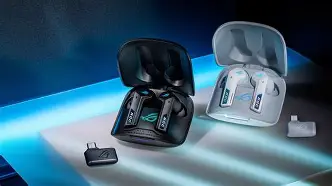
Companion app capabilities
Apps are no longer just for updates. They can expose EQs, gesture customization, diagnostics, firmware rollback, and per-device profiles. Buyers who want fine control should confirm that an app is available for their platform and that it receives regular updates. The Speednova’s feature set is most useful when the app is used to configure behavior.
Comfort and long-session fit
Ergonomics matter for streaming sessions or long commutes. Buyers should prefer low-profile earbuds with multiple tip sizes and, ideally, foam tips to improve seal and long-term comfort. A secure fit also helps ANC and microphone performance.
Microphone and call quality
For many buyers, microphone clarity on calls is a top concern. While game-focused earbuds often prioritize in-game audio cues, buyers who take many calls should test voice clarity in noisy conditions. Look for environmental voice processing and multi-mic arrays as indicators of better real-world call performance.
Battery and power management
Check battery life in the modes you’ll actually use. If most sessions involve ANC and occasional gaming, expect reduced runtimes versus marketing numbers taken with ANC off. The Speednova’s diagnostics can help buyers track true battery health over months of use.
Real-world scenarios and recommendations
- For the commuter who also plays mobile games: rely on the per-device low-latency profile to keep gaming responsive on a handheld device while preserving audio clarity for podcasts on the way to work.
- For the remote worker who hops between calls and music: use the adaptive ANC and speech-prioritized passthrough so meeting participants are clear and ambient office noise is reduced when needed.
- For streamers and content creators: monitor firmware updates via the diagnostics and take advantage of rollback when a new release affects latency or touch behavior before deploying those earbuds in a live session.
Conclusion
The ROG Cetra True Wireless Speednova pairs performance-minded hardware with software subtleties that reward users who take the time to explore settings. The five hidden features outlined—per-device low-latency profiles, adaptive environmental tuning, seamless mono switching, context-sensitive touch macros, and on-device diagnostics with rollback—address real pain points for gamers, commuters, and hybrid workers alike. Buyers who value predictable performance, situational awareness, and diagnostic transparency will find these capabilities especially useful. For those new to the platform, a quick dive into the companion app unlocks most of the Speednova’s real advantage: smart, context-aware behavior that makes everyday audio smoother and less intrusive.